Contact Us


Forex Affiliates KPI Dashboard: What to Review Weekly
January 27, 2026
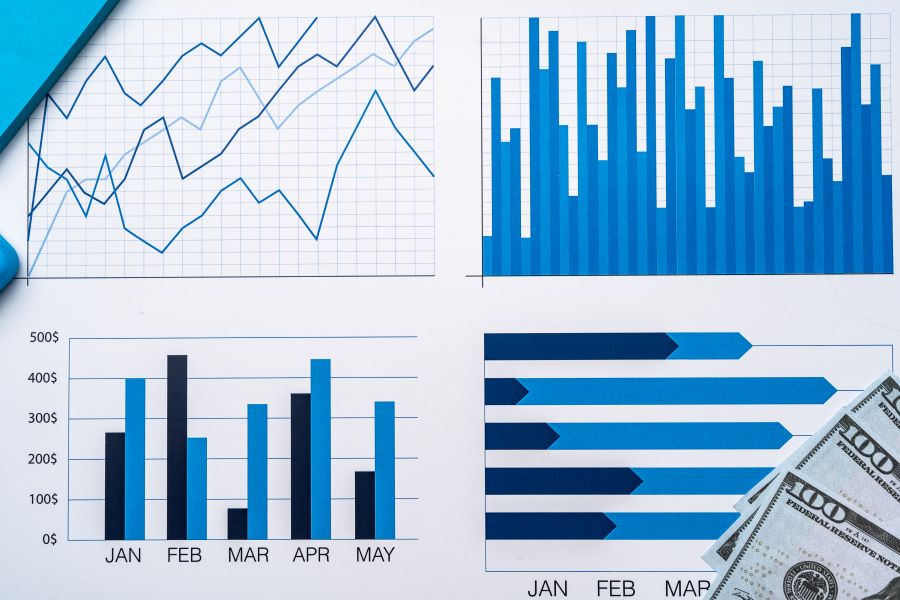
With a well-optimized Forex affiliates KPI dashboard, you can measure and change your strategy in real time to stay ahead of the competition. You can tell which campaigns are bringing in high-value traders and which ones are just wasting your ad money by looking at certain metrics every week.
In this business, getting clicks isn’t the only thing that matters. It’s all about the quality of the flow and how long the traders you bring to your MetaTrader 4 or 5 broker stay. In this guide, we’ll go over the exact numbers you need to look at every Monday morning to make sure your business stays profitable and can grow.
What are the Components of a High-Performing Forex Affiliates KPI Dashboard
As more traders turn to mobile devices to access MetaTrader 5, your affiliate tracking dashboard must be optimized for multiple devices. It should serve as your primary source of information. The dashboard functions to include data from your tracking systems and your broker’s partner portal analytics, such as CellXpert.
To successfully partner with a Meta 4 & 5 broker, focus on these structural elements:
- – Integration of Real-Time Data: Ensure your dashboard syncs with the broker’s API daily to prevent delays in commission reporting.
- – Segmentation Capabilities: Ability to sort data by country, campaign ID, and account type (e.g., ECN vs. Standard).
- – Trend Lines: Use charts to visualize trends, like whether your conversion rate increases or decreases over a rolling 4-week period.
- – User Behavior Tracking: Monitor how many leads download the MT4/MT5 terminal versus sign up.
- – Clear Commission Overview: Your dashboard should clearly display earnings from Forex CPA and ongoing rebates.
#1. Monitoring Lead Quality and Conversion Rate
Your conversion rate is the first metric to check weekly. In 2026, a healthy registration-to-deposit ratio ranges from around 3% to 7%. If your affiliate performance dashboard indicates underperformance, it may suggest issues with your funnel or mismatched ad copy.
When analyzing your conversion rate, consider these actions:
- – Identify the Drop-off Point: Are users clicking your link but not registering, or do they fail to complete the KYC process post-registration?
- – Check Your Deep Links: Ensure affiliate links direct users to the account-opening page rather than generic homepages.
- – Evaluate Traffic Sources: If SEO traffic converts at 10% while social media traffic only converts at 1%, reallocate your resources accordingly.
- – Assess Mobile Optimization: Given that most traders use smartphones, ensure that the broker’s sign-up form is user-friendly and loads quickly.
- – Test Free Offers: Verify that your trading signals or e-books effectively encourage users to fund their accounts.
#2. Analyzing Trade Volume and Lot Distribution
As an Introducing Broker (IB), the trading volume your clients generate is crucial for residual income. The total number of lots traded each week indicates how “sticky” your traders are.
Active clients who trade regularly, rather than those who lose money quickly, are the most valuable.
To effectively track your trading volume metrics, follow these expert tips:
- – Identify Your “Whales”: Locate the top 5% of traders generating the most volume, and ensure they receive appropriate training.
- – Monitor Average Lot Size: A decline in average lot size with an increase in trades might indicate a shift to scalping strategies amongst your clients.
- – Check Asset Popularity: Determine if your clients prefer trading major pairs (like EUR/USD) or more volatile assets like gold and crypto, as this affects your rebate calculations.
- – Identify Inactive Accounts: Target traders who haven’t executed trades in the last seven days with emails featuring weekly market recaps to re-engage them.
- – Compare Trades to Deposits: Numerous trades with few deposits suggest that traders are performing well, beneficial for long-term Lifetime Value (LTV).
Example: Monthly Revenue Projection Calculation
Let’s calculate:
- – Metric Values: 50 active clients, 15 lots traded per client per month on average, $8 rebate per lot
- – Estimated Monthly Income: 50 active clients × 15 lots ×$8 = $6,000
To reach a target of $10,000, aim for either 84 more active clients or assist existing clients in increasing their volume to 25 lots.
#3. Financial Performance: Forex CPA vs. Revenue Share
Your Forex Affiliates KPI Dashboard should differentiate between short-term and long-term earnings. Focus on the “First Time Deposit” (FTD) if you’re skilled in Forex CPA.
However, many successful partners are shifting to hybrid models that combine flat fees with a percentage of the spread.
To evaluate your financial health, monitor:
- – CPA Qualification Status: Assess how many referrals have met the minimum trading criteria to qualify for Forex CPA payments.
- – Cost Per Acquisition (CAC): Calculate your ad spend divided by the number of funded accounts. Achieving an ROI of 100% means that if your CAC is $300, then your CPA is $600.
- – Rebate Growth: Track the weekly increase in your residual commissions; they should continue to rise even if you stop advertising.
- – Withdrawal Accuracy: Compare your dashboard earnings with actual payments received in your bank or e-wallet.
- – Bonus Milestones: Many brokers offer performance bonuses for achieving 20 or more FTDs monthly. Track your progress towards these “boosters” weekly.
#4. Assessing the Health of Active Clients
Your Forex affiliates KPI dashboard should provide clear insights into your “churn rate”. In 2026, acquiring a new trader costs about five times more than retaining an existing one. A high turnover indicates a need to provide more value through education or tools.
To maintain engagement with your active clients, monitor:
- – Login Frequency: How often do your referrals access their MT4 or MT5 accounts?
- – Margin Calls: Frequent margin calls may indicate a need for improved risk management education.
- – Software Usage: Monitor how many clients use copy trading or expert advisors (EAs), as these features generally lead to longer retention.
- – Support Ticket Trends: If clients frequently submit the same questions, consider creating a “How-to” guide for them.
- – Sentiment Analysis: Check if traders are winning or losing; success typically encourages longer retention and more frequent trading.
How to Enhance Your Forex Affiliates KPI Dashboard for MT4/MT5
Partnering with a Meta 4 or 5 broker gives you a competitive edge since these platforms are industry standards.
Your forex affiliate dashboard should clearly reflect how your audience is engaging with these technologies. By 2026, the transition to MetaTrader 5 will be nearly complete, and your affiliate KPI dashboard should reflect this trend.
Technical Enhancements for Your Weekly Review:
- – Verify Tagging: Ensure each lead in the broker’s CRM has the correct affiliate ID.
- – Monitor Server Latency Reports: If your broker provides execution speed data, assess it to guarantee optimal service for your clients.
- – Check for “Dead” Links: Each Sunday, review your funnel to ensure all tracking links are functional.
- – Evaluate Expert Advisor Performance: Track overall earnings for accounts using your Expert Advisors.
- – Engage Sub-Affiliate Data: If you have a network of sub-partners, analyze their performance individually to determine who qualifies for higher commission rates.
Summary and Action Plan
Reviewing your Forex Affiliates KPI Dashboard isn’t merely a task; it is critical to your business strategy. So, consistently monitor your conversion rate, trading volume, and the activity levels of your active clients. From thereon, you can cultivate a long-term, high-revenue stream that grows annually. The affiliates who excel in 2026 will be adept at leveraging their data.
Your To-Do List for the Week:
- – Monday 9 AM: Obtain the weekly report for all active clients and look for drops in volume.
- – Monday 10 AM: Calculate earnings from last week’s Forex CPA campaigns.
- – Tuesday: Improve any landing pages with a conversion rate below 3%.
- – Wednesday: Email detailed information to leads who signed up but haven’t made deposits.
- – Thursday: Research new long-tail keywords for additional organic traffic.
2026 Success Performance Benchmarks:
| Metric | Target Goal (2026) | Importance |
| Registration-to-Deposit Ratio | (> 5%) | Critical |
| Weekly Trader Churn | (< 2%) | High if > 75% of users on mobile |
| Average LTV per Client | Very High (> $1,200) |
Conclusion
Mastering your Forex Affiliates KPI Dashboard can allow you to transform your side hustle into a full-time business. If you regularly monitor trading volume and optimize for a higher conversion rate, you can maximize the profitability of your partnerships with Meta 4 & 5 brokers.
Data provides clarity. Keep an eye out for your metrics on the affiliate performance dashboard.
Join VT Affiliates. Gain access to some of the most transparent and effective reporting tools in the industry. We provide the relevant dashboard you need to succeed, whether you aim for the highest CPA or lifetime rebates.
Frequently Asked Questions (FAQs)
1. What is the most important number on a Forex affiliates KPI dashboard?
The conversion rate from signing up to making a first deposit (FTD) is critical. It directly impacts your cash flow and indicates traffic quality.
2. How often should I check my affiliate stats?
While real-time data is accessible, a thorough weekly review allows you to discern trends without being distracted by daily market fluctuations.
3. Why do I have many trades but minimal commissions?
Payments for each acquisition often occur in CPA models. If your traders are highly active, consider transitioning to a hybrid model.
4. What will a “good” CPA rate be in 2026?
A competitive Forex CPA may range from $600 to $1,500 per qualified trader. This relies on your location and traffic quality.
5. How can I make more of my clients active?
Invest in educational efforts. Weekly market analyses, MT4/MT5 tutorials, and risk management tips help keep traders engaged and active.
6. Does the trading platform (MT4 or MT5) affect my KPIs?
Yes, MT5 accounts typically yield higher retention rates in 2026. It’s because of the better features and a broader range of asset classes.
7. What should I do if my conversion rate suddenly drops?
Immediately check your tracking links for issues. If they function correctly, investigate potential technical problems with the broker’s landing page or diluted traffic.
8. Can an Introducing Broker (IB) view each client’s trades?
Most professional IB dashboards display lot sizes and volume for each client. Meanwhile, the dashboard keeps individual trade details private to comply with data regulations.